Gleanings — §31

Arabic source with Shoghi Effendi’s authorized English translation. Paragraph 31 of 729.

Source (Arabic)

يا كرمل بشّري صهيون قولي أتى المكنون بسلطان غلب العالم وبنور ساطع به أشرقت الأرض ومن عليها إِيَّاكِ أن تكوني متوقّفة في مقامك أسرعي ثمّ طوفي مدينة اللّه الّتي نزلت من السّماء وكعبة اللّه الّتي كانت مطاف المقرّبين والمخلصين والملائكة العالين وأحبّ أن أبشّر كلّ بقعة من بقاع الأرض وكلّ مدينة من مدائنها بهذا الظّهور الّذي به انجذب فؤاد الطّور ونادت السّدرة الملك والملكوت للّه ربّ الأرباب هذا يوم فيه بشّر البحر والبَرّ وأخبر بما يظهر من بعد من عنايات اللّه المكنونة المستورة عن العقول والأبصار سوف تجري سفينة اللّه عليكِ ويظهر أهل البهاء الّذين ذكرهم في كتاب الأسماء

Shoghi Effendi Translation

“Call out to Zion, O Carmel, and announce the joyful tidings: He that was hidden from mortal eyes is come! His all-conquering sovereignty is manifest; His all-encompassing splendor is revealed. Beware lest thou hesitate or halt. Hasten forth and circumambulate the City of God that hath descended from heaven, the celestial Kaaba round which have circled in adoration the favored of God, the pure in heart, and the company of the most exalted angels. Oh, how I long to announce unto every spot on the surface of the earth, and to carry to each one of its cities, the glad-tidings of this Revelation — a Revelation to which the heart of Sinai hath been attracted, and in whose name the Burning Bush is calling: ‘Unto God, the Lord of Lords, belong the kingdoms of earth and heaven.’ Verily this is the Day in which both land and sea rejoice at this announcement, the Day for which have been laid up those things which God, through a bounty beyond the ken of mortal mind or heart, hath destined for revelation. Erelong will God sail His Ark upon thee, and will manifest the people of Bahá who have been mentioned in the Book of Names.”

Translation Notes

صهيون
ṣhíwn ṣ-h-y → “zion”

literal: zion

1 occurrence in corpus

قولي
qúlí q-w-l

literal: say; saying

SE rendered كرمل (krml), بشّري (bshshrí), صهيون (ṣhíwn), قولي (qúlí), أتى (ʾatى), المكنون (al-mknún), بسلطان (bslṭán) as “O, announce the joyful, Zion, was hidden, all-conquering sovereignty”

words 36% speech 21% say 14% “call 7% unto 7% through 7% ‘call 7%
أتى
ʾatى ʾ-t-y

literal: come; came

SE rendered كرمل (krml), بشّري (bshshrí), صهيون (ṣhíwn), قولي (qúlí), أتى (ʾatى), المكنون (al-mknún), بسلطان (bslṭán), غلب (ghlb), العالم (al-ʿálm), وبنور (wbnúr) as “O, announce the joyful, Zion, was hidden, all-conquering sovereignty, all-encompassing splendor”

come 47% came 16% hath 11% appeared 9% coming 7% fulfilled 4% will 2% did 2% now 2% made 2%
غلب
ghlb gh-l-b

literal: dominance; overcome; victorious

SE rendered صهيون (ṣhíwn), قولي (qúlí), أتى (ʾatى), المكنون (al-mknún), بسلطان (bslṭán), غلب (ghlb), العالم (al-ʿálm), وبنور (wbnúr), ساطع (sáṭʿ), أشرقت (ʾashrqt) as “Zion, was hidden, all-conquering sovereignty, all-encompassing splendor, is”

العالم
al-ʿálm ʿ-l-m

literal: world; knowledge; worlds

SE rendered المكنون (al-mknún), بسلطان (bslṭán), غلب (ghlb), العالم (al-ʿálm), وبنور (wbnúr), ساطع (sáṭʿ), أشرقت (ʾashrqt), الأرض (ar-rḍ) as “was hidden, all-conquering sovereignty, all-encompassing splendor, is, the earth”

world 66% earth 9% mankind 7% realm 4% all 4% whole 3% learned 2% men 2% all-knowing 2% knoweth 1%
ساطع
sáṭʿ s-ṭ-ʿ

literal: shining; radiant; rise

SE rendered المكنون (al-mknún), بسلطان (bslṭán), غلب (ghlb), العالم (al-ʿálm), وبنور (wbnúr), ساطع (sáṭʿ), أشرقت (ʾashrqt), الأرض (ar-rḍ) as “was hidden, all-conquering sovereignty, all-encompassing splendor, is, the earth”

مقامك
mqámk q-w-m

literal: station; people; place

SE rendered تكوني (tkúní), متوقّفة (mtúqqfh), مقامك (mqámk), أسرعي (ʾasrʿí), طوفي (ṭúfí), مدينة (mdính), اللّه (al-lh) as “hesitate, Hasten, circumambulate, City, God”

ربّ
rbb r-b-b

literal: lord; lordship

SE rendered السّدرة (as-sdrh), الملك (al-mlk), والملكوت (wálmlkút), للّه (lllh), ربّ (rbb), الأرباب (ar-rbáb), يوم (yúm), بشّر (bshshr), البحر (al-bḥr) as “Burning Bush, Lord of Lords, kingdoms of, God, Day, rejoice, sea”

lord 94% god 3% before 0% who 0% all-glorious 0% thou 0% \‘lord 0% yet 0% himself 0% creator 0%
عنايات
ʿnáyát ʿ-n-y

literal: meaning; care; meanings

SE rendered وأخبر (wʾakhbr), يظهر (yẓhr), عنايات (ʿnáyát), اللّه (al-lh), المكنونة (al-mknúnh), المستورة (al-mstúrh) as “announcement, for, God, the”

manifold 30% grace 20% bounty 20% most 10% unfailing 10% bounties 10%

Model Translations by Shoghi Effendi

Epistle to the Son of the Wolf cover

Epistle to the Son of the Wolf

Bahá’u’lláh

The last outstanding Tablet revealed by Bahá’u’lláh, written around 1891 and addressed to Shaykh Muḥammad-Taqí of Iṣfahán. It calls upon that rapacious priest to repent, quotes the most celebrated passages from Bahá’u’lláh’s own writings, and adduces proofs establishing the validity of His Cause.

268 ¶

Fire Tablet cover

Fire Tablet

Bahá’u’lláh

Revealed in late 1871 during a period of severe hardship in ‘Akká, this Tablet takes the form of an anguished dialogue between Bahá’u’lláh and God. Questions about the sufferings of the faithful are answered with divine assurances, building to a crescendo of triumph over tribulation.

50 ¶

Kitáb-i-'Ahd cover

Kitáb-i-’Ahd

Bahá’u’lláh

The Book of the Covenant — Bahá’u’lláh’s Will and Testament, written entirely in His own hand and unsealed on the ninth day after His ascension. It designates ‘Abdu’l-Bahá as His successor and establishes what Shoghi Effendi called the mightiest Covenant in all religious history.

16 ¶

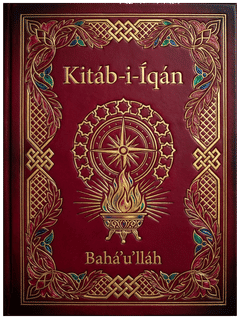
Kitáb-i-Íqán cover

Kitáb-i-Íqán

Bahá’u’lláh

The principal doctrinal work of the Faith, revealed in Baghdad within the space of two days and two nights in response to questions from the Báb’s maternal uncle. Shoghi Effendi described it as occupying a position unequalled by any work except the Kitáb-i-Aqdas — a model of Persian prose, at once original, chaste, vigorous, and remarkably lucid.

291 ¶

Prayers and Meditations cover

Prayers and Meditations

Bahá’u’lláh

Published in 1938, this companion volume to Gleanings contains 184 prayers and meditations selected by Shoghi Effendi from Bahá’u’lláh’s devotional writings revealed across successive exiles from Baghdad to ‘Akká. Shoghi Effendi described it as a volume whose perusal would deepen the spirit of devotion and faith.

858 ¶

Tablet of Aḥmad cover

Tablet of Aḥmad

Bahá’u’lláh

Revealed in Adrianople and addressed to a believer named Aḥmad, this Tablet has been invested by Bahá’u’lláh with a special potency and significance. Its central imagery draws on the metaphor of fire and water: “Be thou as a flame of fire to My enemies and a river of life eternal to My loved ones.”

17 ¶

Tablet of Carmel cover

Tablet of Carmel

Bahá’u’lláh

Revealed during a visit to Mount Carmel, this Tablet addresses the mountain directly and prophesies its future as the world spiritual and administrative center of the Faith. Shoghi Effendi designated it one of three foundational Charters. Its imagery of the Ark and the dwellers therein prefigures the Universal House of Justice.

5 ¶

Tablet of the Holy Mariner cover

Tablet of the Holy Mariner

Bahá’u’lláh

Chanted aloud in the outskirts of Baghdad just weeks before the Declaration in the Garden of Riḍván, its gloomy prognostications aroused the grave apprehensions of all who heard it. Only the Arabic portion has an authorized translation; the Persian portion remains untranslated.

57 ¶

The Hidden Words cover

The Hidden Words

Bahá’u’lláh

Seventy-one Arabic and eighty-two Persian aphorisms revealed around 1858 while walking along the banks of the Tigris in Baghdad. Originally designated the “Hidden Book of Fáṭimih,” Shoghi Effendi described it as a marvelous collection of gem-like utterances occupying a position of unsurpassed preeminence among the ethical writings of the Faith.

160 ¶

Will and Testament cover

Will and Testament

‘Abdu’l-Bahá

Written by ‘Abdu’l-Bahá in three parts between 1901 and 1908, opened and read after His passing on 28 November 1921. Shoghi Effendi designated it the Charter of the New World Order — the mightiest instrument forged to ensure the continuity of the three ages of the Bahá’í Dispensation.

59 ¶