Gleanings — §43

Arabic source with Shoghi Effendi’s authorized English translation. Paragraph 43 of 729.

Source (Arabic)

حال امروز مشاهده نما که چقدر از سلاطين باسم آن حضرت تعظيم مينمايند و چه قدر از بلاد و اهل آن که در ظلّ او ساکنند و به نسبت بآن حضرت افتخار دارند چنانچه بر منابر و گلدسته‌ها اين اسم مبارک را بکمال تعظيم و تکريم ذکر مينمايند و سلاطينی هم که در ظلّ آن حضرت داخل نشده‌اند و قميص کفر را تجديد ننموده‌اند ايشانهم ببزرگی و عظمت آن شمس عنايت مقرّ و معترفند اينست سلطنت ظاهره که مشاهده ميکنی و اين لابدّ است از برای جميع انبياء که يا در حيات و يا بعد از عروج ايشان بموطن حقيقی ظاهر و ثابت ميشود ...

Shoghi Effendi Translation

Consider, how great is the change today! Behold, how many are the Sovereigns who bow the knee before His name! How numerous the nations and kingdoms who have sought the shelter of His shadow, who bear allegiance to His Faith, and pride themselves therein! From the pulpit-top there ascendeth today the words of praise which, in utter lowliness, glorify His blessed name; and from the heights of minarets there resoundeth the call that summoneth the concourse of His people to adore Him. Even those Kings of the earth who have refused to embrace His Faith and to put off the garment of unbelief, nonetheless confess and acknowledge the greatness and overpowering majesty of that Daystar of loving-kindness. Such is His earthly sovereignty, the evidences of which thou dost on every side behold. This sovereignty must needs be revealed and established either in the lifetime of every Manifestation of God or after His ascension unto His true habitation in the realms above.…

Translation Notes

نما
nmá n-m-ʾ

literal: do

SE rendered حال (ḥál), امروز (imrúz), مشاهده (msháhdh), نما (nmá), چقدر (chqdr), از (iz), سلاطين (sláṭín), باسم (básm), حضرت (ḥḍrt) as “Consider, today, Behold, how many, are the, Sovereigns, before His name, Him”

strive 21% thou 14% endeavour 14% do 7% set 7% gird 7% cut 7% shouldst 7% consider 7% nurtured 7%
مينمايند
mínmáynd nmúdn

literal: do; to do; show

SE rendered از (iz), سلاطين (sláṭín), باسم (básm), حضرت (ḥḍrt), تعظيم (tʿẓím), مينمايند (mínmáynd), چه (chh), قدر (qdr), از (iz), بلاد (blád), اهل (ihl) as “of, Sovereigns, before His name, Him, bow the knee, How numerous, nations and kingdoms, people”

would 25% pronouncing 25% ascendeth 25% still 25%
قدر
qdr q-d-r

literal: power; powerful

SE rendered حضرت (ḥḍrt), تعظيم (tʿẓím), مينمايند (mínmáynd), چه (chh), قدر (qdr), از (iz), بلاد (blád), اهل (ihl), ظلّ (ẓll) as “Him, bow the knee, How numerous, of, nations and kingdoms, people, the shelter”

hath 21% ordain 18% power 16% ordained 11% how 7% do 7% might 6% decreed 5% had 4% according 4%
ساکنند
sáknnd s-k-n

literal: inhabitants

SE rendered از (iz), بلاد (blád), اهل (ihl), ظلّ (ẓll), ساکنند (sáknnd), نسبت (nsbt), حضرت (ḥḍrt), افتخار (iftkhár) as “of, nations and kingdoms, people, the shelter, bear allegiance to, His Faith, and pride themselves therein”

abide 25% inhabit 25% who 25% have 25%
گلدسته‌ها
gldsth‌há wgldsth → “heights”

literal: minarets

1 occurrence in corpus

نشده‌اند
nshdh‌ánd shdn

literal: become; to become; became

SE rendered ظلّ (ẓll), حضرت (ḥḍrt), داخل (dákhl), نشده‌اند (nshdh‌ánd), قميص (qmíṣ), کفر (kfr), تجديد (tjdíd) as “shadow, refused to embrace, the garment of unbelief, to put off”

have 43% still 29% failed 14% yet 14%
کفر
kfr k-f-r

literal: disbelieve; disbelieved; disbelief

SE rendered حضرت (ḥḍrt), داخل (dákhl), نشده‌اند (nshdh‌ánd), قميص (qmíṣ), کفر (kfr), تجديد (tjdíd), ننموده‌اند (nnmúdh‌ánd), ايشانهم (iyshánhm) as “refused to embrace, the garment of unbelief, to put off, nonetheless confess and acknowledge”

ببزرگی

literal: greatness

1 occurrence in corpus

مقرّ
mqrr q-r-r

literal: abode; place; established

SE rendered ببزرگی (bbzrgí), عظمت (ʿẓmt), شمس (shms), عنايت (ʿnáyt), مقرّ (mqrr), معترفند (mʿtrfnd), اينست (iynst), سلطنت (slṭnt) as “the greatness, and overpowering majesty, that Daystar, of loving-kindness, Such is, His earthly sovereignty”

معترفند
mʿtrfnd ʿ-r-f

literal: knowledge; know; knower

SE rendered عظمت (ʿẓmt), شمس (shms), عنايت (ʿnáyt), مقرّ (mqrr), معترفند (mʿtrfnd), اينست (iynst), سلطنت (slṭnt), ظاهره (ẓáhrh), مشاهده (msháhdh) as “and overpowering majesty, that Daystar, of loving-kindness, Such is, His earthly sovereignty, the evidences”

truth 50% testify 50%
انبياء
inbíáʾ n-b-ʾ

literal: prophet; prophets

SE rendered لابدّ (lábdd), از (iz), برای (bráy), جميع (jmíʿ), انبياء (inbíáʾ), حيات (ḥíát), از (iz) as “must needs, of, every Manifestation, the lifetime”

حقيقی
ḥqíqí ḥ-q-q

literal: truth; true

SE rendered از (iz), عروج (ʿrúj), ايشان (iyshán), بموطن (bmúṭn), حقيقی (ḥqíqí), ظاهر (ẓáhr) as “of, ascension, His, unto His true habitation, revealed and established”

true 33% ideal 26% truth 13% divine 7% truly 4% omnipotent 4% most 4% real 4% inner 2% veritable 2%
ثابت
thábt th-b-t

literal: established; establish; affirmation

SE rendered عروج (ʿrúj), ايشان (iyshán), بموطن (bmúṭn), حقيقی (ḥqíqí), ظاهر (ẓáhr), ثابت (thábt) as “ascension, His, unto His true habitation, revealed and established”

Model Translations by Shoghi Effendi

Epistle to the Son of the Wolf cover

Epistle to the Son of the Wolf

Bahá’u’lláh

The last outstanding Tablet revealed by Bahá’u’lláh, written around 1891 and addressed to Shaykh Muḥammad-Taqí of Iṣfahán. It calls upon that rapacious priest to repent, quotes the most celebrated passages from Bahá’u’lláh’s own writings, and adduces proofs establishing the validity of His Cause.

268 ¶

Fire Tablet cover

Fire Tablet

Bahá’u’lláh

Revealed in late 1871 during a period of severe hardship in ‘Akká, this Tablet takes the form of an anguished dialogue between Bahá’u’lláh and God. Questions about the sufferings of the faithful are answered with divine assurances, building to a crescendo of triumph over tribulation.

50 ¶

Kitáb-i-'Ahd cover

Kitáb-i-’Ahd

Bahá’u’lláh

The Book of the Covenant — Bahá’u’lláh’s Will and Testament, written entirely in His own hand and unsealed on the ninth day after His ascension. It designates ‘Abdu’l-Bahá as His successor and establishes what Shoghi Effendi called the mightiest Covenant in all religious history.

16 ¶

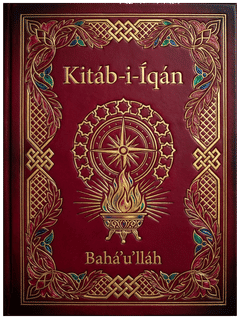
Kitáb-i-Íqán cover

Kitáb-i-Íqán

Bahá’u’lláh

The principal doctrinal work of the Faith, revealed in Baghdad within the space of two days and two nights in response to questions from the Báb’s maternal uncle. Shoghi Effendi described it as occupying a position unequalled by any work except the Kitáb-i-Aqdas — a model of Persian prose, at once original, chaste, vigorous, and remarkably lucid.

291 ¶

Prayers and Meditations cover

Prayers and Meditations

Bahá’u’lláh

Published in 1938, this companion volume to Gleanings contains 184 prayers and meditations selected by Shoghi Effendi from Bahá’u’lláh’s devotional writings revealed across successive exiles from Baghdad to ‘Akká. Shoghi Effendi described it as a volume whose perusal would deepen the spirit of devotion and faith.

858 ¶

Tablet of Aḥmad cover

Tablet of Aḥmad

Bahá’u’lláh

Revealed in Adrianople and addressed to a believer named Aḥmad, this Tablet has been invested by Bahá’u’lláh with a special potency and significance. Its central imagery draws on the metaphor of fire and water: “Be thou as a flame of fire to My enemies and a river of life eternal to My loved ones.”

17 ¶

Tablet of Carmel cover

Tablet of Carmel

Bahá’u’lláh

Revealed during a visit to Mount Carmel, this Tablet addresses the mountain directly and prophesies its future as the world spiritual and administrative center of the Faith. Shoghi Effendi designated it one of three foundational Charters. Its imagery of the Ark and the dwellers therein prefigures the Universal House of Justice.

5 ¶

Tablet of the Holy Mariner cover

Tablet of the Holy Mariner

Bahá’u’lláh

Chanted aloud in the outskirts of Baghdad just weeks before the Declaration in the Garden of Riḍván, its gloomy prognostications aroused the grave apprehensions of all who heard it. Only the Arabic portion has an authorized translation; the Persian portion remains untranslated.

57 ¶

The Hidden Words cover

The Hidden Words

Bahá’u’lláh

Seventy-one Arabic and eighty-two Persian aphorisms revealed around 1858 while walking along the banks of the Tigris in Baghdad. Originally designated the “Hidden Book of Fáṭimih,” Shoghi Effendi described it as a marvelous collection of gem-like utterances occupying a position of unsurpassed preeminence among the ethical writings of the Faith.

160 ¶

Will and Testament cover

Will and Testament

‘Abdu’l-Bahá

Written by ‘Abdu’l-Bahá in three parts between 1901 and 1908, opened and read after His passing on 28 November 1921. Shoghi Effendi designated it the Charter of the New World Order — the mightiest instrument forged to ensure the continuity of the three ages of the Bahá’í Dispensation.

59 ¶