Gleanings — §623

Arabic source with Shoghi Effendi’s authorized English translation. Paragraph 623 of 729.

Source (Arabic)

مدّعیان محبّت از جمال قدم شرم نمائید و از زحمات و مشقّاتی که در سبیل الهی حمل نموده پند گیرید و متنبّه شوید اگر مقصود این اعمال سخیفه و افعال باطله بوده حمل این زحمات بچه جهت شده هر سارق و فاسقی باین اعمال و اقوال شما قبل از ظهور عامل

Shoghi Effendi Translation

Say: Be ashamed, O ye that call yourselves the lovers of the Ancient Beauty! Be ye admonished by the tribulation He hath suffered, by the burden of anguish He hath carried for the sake of God. Let your eyes be opened. To what purpose hath He labored, if the manifold trials He hath endured are, in the end, to result in such contemptible professions, and such wretched conduct? Every robber, every worker of iniquity, hath, in the days prior to My Revelation, uttered these same words, and performed these same deeds.

Translation Notes

از
iz ʾ-z “of”

literal: from

SE rendered مدّعیان (mddʿíán)محبّت (mḥbbt)از (iz)جمال (jmál)قدم (qdm)شرم (shrm)نمائید (nmáʾíd)از (iz)زحمات (zḥmát) as “call yourselves, lovers, by, Ancient Beauty, ashamed, Be, tribulation”

23 occurrences in corpus

قدم
qdm q-d-m

literal: ancient; step; eternity

SE rendered مدّعیان (mddʿíán)محبّت (mḥbbt)از (iz)جمال (jmál)قدم (qdm)شرم (shrm)نمائید (nmáʾíd)از (iz)زحمات (zḥmát)مشقّاتی (mshqqátí) as “call yourselves, lovers, by, Ancient Beauty, ashamed, Be, tribulation, burden of anguish”

نمائید
nmáʾíd n-m-ʾ “be”

literal: show

SE rendered مدّعیان (mddʿíán)محبّت (mḥbbt)از (iz)جمال (jmál)قدم (qdm)شرم (shrm)نمائید (nmáʾíd)از (iz)زحمات (zḥmát)مشقّاتی (mshqqátí) as “call yourselves, lovers, by, Ancient Beauty, ashamed, Be, tribulation, burden of anguish”

recite 10% remember 10% consider 10% observe 10% ye 10% upon 10% arise 10% resolve 10% deliver 10% bestir 10%
گیرید
gíríd g-y-r

literal: take; takes; to take

SE rendered سبیل (sbíl)الهی (al-hí)حمل (ḥml)نموده (nmúdh)پند (pnd)گیرید (gíríd)متنبّه (mtnbbh)شوید (shúyd)مقصود (mqṣúd) as “sake of, God, hath suffered, hath carried, admonished, eyes be opened, purpose”

abide 33% will 33% walk 33%
سخیفه
skhífh s-kh-f

literal: base, trivial

SE rendered متنبّه (mtnbbh)شوید (shúyd)مقصود (mqṣúd)اعمال (iʿmál)سخیفه (skhífh)افعال (ifʿál)باطله (báṭlh)حمل (ḥml) as “eyes be opened, purpose, conduct, wretched, hath He labored”

2 occurrences in corpus

جهت
jht j-h-t

literal: direction; reason; directions

SE rendered باطله (báṭlh)حمل (ḥml)زحمات (zḥmát)بچه (bchh)جهت (jht)هر (hr)سارق (sárq)فاسقی (fásqí)باین (báyn)اعمال (iʿmál) as “wretched, hath He labored, manifold trials, what, Every, robber, worker of iniquity, deeds”

side 33% other 33% hand 17% upon 17%
فاسقی
fásqí f-s-q “profligate” Distinctive

literal: profligate, transgressor

This form usually rendered as “worker” (1 occurrences)

profligate 40% worker 20% doers 20% ungodly 20%
باین
báyn b-y-n

literal: utterance; explanation; between

SE rendered بچه (bchh)جهت (jht)هر (hr)سارق (sárq)فاسقی (fásqí)باین (báyn)اعمال (iʿmál)اقوال (iqúál)از (iz)ظهور (ẓhúr) as “what, Every, robber, worker of iniquity, deeds, words, to, Revelation”

Model Translations by Shoghi Effendi

Epistle to the Son of the Wolf cover

Epistle to the Son of the Wolf

Bahá’u’lláh

The last outstanding Tablet revealed by Bahá’u’lláh, written around 1891 and addressed to Shaykh Muḥammad-Taqí of Iṣfahán. It calls upon that rapacious priest to repent, quotes the most celebrated passages from Bahá’u’lláh’s own writings, and adduces proofs establishing the validity of His Cause.

268 ¶

Fire Tablet cover

Fire Tablet

Bahá’u’lláh

Revealed in late 1871 during a period of severe hardship in ‘Akká, this Tablet takes the form of an anguished dialogue between Bahá’u’lláh and God. Questions about the sufferings of the faithful are answered with divine assurances, building to a crescendo of triumph over tribulation.

50 ¶

Kitáb-i-'Ahd cover

Kitáb-i-’Ahd

Bahá’u’lláh

The Book of the Covenant — Bahá’u’lláh’s Will and Testament, written entirely in His own hand and unsealed on the ninth day after His ascension. It designates ‘Abdu’l-Bahá as His successor and establishes what Shoghi Effendi called the mightiest Covenant in all religious history.

16 ¶

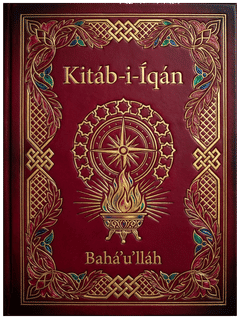
Kitáb-i-Íqán cover

Kitáb-i-Íqán

Bahá’u’lláh

The principal doctrinal work of the Faith, revealed in Baghdad within the space of two days and two nights in response to questions from the Báb’s maternal uncle. Shoghi Effendi described it as occupying a position unequalled by any work except the Kitáb-i-Aqdas — a model of Persian prose, at once original, chaste, vigorous, and remarkably lucid.

291 ¶

Prayers and Meditations cover

Prayers and Meditations

Bahá’u’lláh

Published in 1938, this companion volume to Gleanings contains 184 prayers and meditations selected by Shoghi Effendi from Bahá’u’lláh’s devotional writings revealed across successive exiles from Baghdad to ‘Akká. Shoghi Effendi described it as a volume whose perusal would deepen the spirit of devotion and faith.

858 ¶

Tablet of Aḥmad cover

Tablet of Aḥmad

Bahá’u’lláh

Revealed in Adrianople and addressed to a believer named Aḥmad, this Tablet has been invested by Bahá’u’lláh with a special potency and significance. Its central imagery draws on the metaphor of fire and water: “Be thou as a flame of fire to My enemies and a river of life eternal to My loved ones.”

17 ¶

Tablet of Carmel cover

Tablet of Carmel

Bahá’u’lláh

Revealed during a visit to Mount Carmel, this Tablet addresses the mountain directly and prophesies its future as the world spiritual and administrative center of the Faith. Shoghi Effendi designated it one of three foundational Charters. Its imagery of the Ark and the dwellers therein prefigures the Universal House of Justice.

5 ¶

Tablet of the Holy Mariner cover

Tablet of the Holy Mariner

Bahá’u’lláh

Chanted aloud in the outskirts of Baghdad just weeks before the Declaration in the Garden of Riḍván, its gloomy prognostications aroused the grave apprehensions of all who heard it. Only the Arabic portion has an authorized translation; the Persian portion remains untranslated.

57 ¶

The Hidden Words cover

The Hidden Words

Bahá’u’lláh

Seventy-one Arabic and eighty-two Persian aphorisms revealed around 1858 while walking along the banks of the Tigris in Baghdad. Originally designated the “Hidden Book of Fáṭimih,” Shoghi Effendi described it as a marvelous collection of gem-like utterances occupying a position of unsurpassed preeminence among the ethical writings of the Faith.

160 ¶

Will and Testament cover

Will and Testament

‘Abdu’l-Bahá

Written by ‘Abdu’l-Bahá in three parts between 1901 and 1908, opened and read after His passing on 28 November 1921. Shoghi Effendi designated it the Charter of the New World Order — the mightiest instrument forged to ensure the continuity of the three ages of the Bahá’í Dispensation.

59 ¶