Gleanings — §355

Arabic source with Shoghi Effendi’s authorized English translation. Paragraph 355 of 729.

Source (Arabic)

معان لا تحویها قمص الألفاظ وکم منها لیست لها عبارة ولم تعط بیانًا ولا اشارةً وکم منها لا یمکن بیانها لعدم حضور أوانها کما قیل: "لا کلّ ما یعلم یقال ولا کلّ ما یقال حان وقته ولا کلّ ما حان وقته حضر أهله"، ومنها ما

Shoghi Effendi Translation

How great the multitude of truths which the garment of words can never contain! How vast the number of such verities as no expression can adequately describe, whose significance can never be unfolded, and to which not even the remotest allusions can be made! How manifold are the truths which must remain unuttered until the appointed time is come! Even as it hath been said: “Not everything that a man knoweth can be disclosed, nor can everything that he can disclose be regarded as timely, nor can every timely utterance be considered as suited to the capacity of those who hear it.”

Translation Notes

تحویها
tḥúyhá ḥ-w-y “contain”

literal: contain

1 occurrence in corpus

لیست
líst l-y-s “no”

literal: is not; not; not-be

SE rendered تحویها (tḥúyhá)قمص (qmṣ)الألفاظ (al-lfáẓ)وکم (wkm)لیست (líst)عبارة (ʿbárh)ولم (wlm)تعط (tʿṭ)بیانًا (bíánan) as “contain, garment, words, How, no, expression, can never, describe, significance”

can 24% have 18% none 12% there 12% nothing 6% am 6% given 6% accuse 6% sorrow 6% possessed 6%
یمکن
ymkn m-k-n

literal: possibility; possible; possible things

SE rendered بیانًا (bíánan)اشارةً (ishárhan)وکم (wkm)یمکن (ymkn)بیانها (bíánhá)لعدم (lʿdm)حضور (ḥḍúr)أوانها (ʾawánhá)کما (kmá) as “significance, allusions, How, unuttered, until, is come, time, as”

achieved 50% attainable 25% hath 25%
أوانها
ʾawánhá ʾ-w-n “moment” Distinctive

literal: moment; time; times

This form usually rendered as “time” (1 occurrences)

moment 40% time 20% times 20% twinkling 20%
کما
kmá k-m “as”

literal: decrease; less; as

SE rendered بیانها (bíánhá)لعدم (lʿdm)حضور (ḥḍúr)أوانها (ʾawánhá)کما (kmá)قیل (qíl)یعلم (yʿlm)یقال (yqál) as “unuttered, until, is come, time, as, hath been said, knoweth, be disclosed”

3 occurrences in corpus

وقته
wqth w-q-t

literal: time; appointed time; times

SE rendered یعلم (yʿlm)یقال (yqál)یقال (yqál)حان (ḥán)وقته (wqth)حان (ḥán)وقته (wqth)حضر (ḥḍr)أهله"، (ʾahlh"،) as “knoweth, disclose, regarded as timely, suited to the capacity, those who hear it.””

time 38% hour 25% ages 6% moment 6% days 6% age 6% what 6% chance 6%
ومنها
wmnhá m-n “from”

literal: from; who; from/of

SE rendered حان (ḥán)وقته (wqth)حضر (ḥḍr)أهله"، (ʾahlh"،)ومنها (wmnhá) as “timely, suited to the capacity, those who hear it.””

whosoever 20% above 14% all 14% others 11% who 9% such 9% man 6% amongst 6% whoso 6% unto 6%

Model Translations by Shoghi Effendi

Epistle to the Son of the Wolf cover

Epistle to the Son of the Wolf

Bahá’u’lláh

The last outstanding Tablet revealed by Bahá’u’lláh, written around 1891 and addressed to Shaykh Muḥammad-Taqí of Iṣfahán. It calls upon that rapacious priest to repent, quotes the most celebrated passages from Bahá’u’lláh’s own writings, and adduces proofs establishing the validity of His Cause.

268 ¶

Fire Tablet cover

Fire Tablet

Bahá’u’lláh

Revealed in late 1871 during a period of severe hardship in ‘Akká, this Tablet takes the form of an anguished dialogue between Bahá’u’lláh and God. Questions about the sufferings of the faithful are answered with divine assurances, building to a crescendo of triumph over tribulation.

50 ¶

Kitáb-i-'Ahd cover

Kitáb-i-’Ahd

Bahá’u’lláh

The Book of the Covenant — Bahá’u’lláh’s Will and Testament, written entirely in His own hand and unsealed on the ninth day after His ascension. It designates ‘Abdu’l-Bahá as His successor and establishes what Shoghi Effendi called the mightiest Covenant in all religious history.

16 ¶

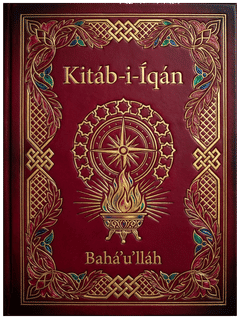
Kitáb-i-Íqán cover

Kitáb-i-Íqán

Bahá’u’lláh

The principal doctrinal work of the Faith, revealed in Baghdad within the space of two days and two nights in response to questions from the Báb’s maternal uncle. Shoghi Effendi described it as occupying a position unequalled by any work except the Kitáb-i-Aqdas — a model of Persian prose, at once original, chaste, vigorous, and remarkably lucid.

291 ¶

Prayers and Meditations cover

Prayers and Meditations

Bahá’u’lláh

Published in 1938, this companion volume to Gleanings contains 184 prayers and meditations selected by Shoghi Effendi from Bahá’u’lláh’s devotional writings revealed across successive exiles from Baghdad to ‘Akká. Shoghi Effendi described it as a volume whose perusal would deepen the spirit of devotion and faith.

858 ¶

Tablet of Aḥmad cover

Tablet of Aḥmad

Bahá’u’lláh

Revealed in Adrianople and addressed to a believer named Aḥmad, this Tablet has been invested by Bahá’u’lláh with a special potency and significance. Its central imagery draws on the metaphor of fire and water: “Be thou as a flame of fire to My enemies and a river of life eternal to My loved ones.”

17 ¶

Tablet of Carmel cover

Tablet of Carmel

Bahá’u’lláh

Revealed during a visit to Mount Carmel, this Tablet addresses the mountain directly and prophesies its future as the world spiritual and administrative center of the Faith. Shoghi Effendi designated it one of three foundational Charters. Its imagery of the Ark and the dwellers therein prefigures the Universal House of Justice.

5 ¶

Tablet of the Holy Mariner cover

Tablet of the Holy Mariner

Bahá’u’lláh

Chanted aloud in the outskirts of Baghdad just weeks before the Declaration in the Garden of Riḍván, its gloomy prognostications aroused the grave apprehensions of all who heard it. Only the Arabic portion has an authorized translation; the Persian portion remains untranslated.

57 ¶

The Hidden Words cover

The Hidden Words

Bahá’u’lláh

Seventy-one Arabic and eighty-two Persian aphorisms revealed around 1858 while walking along the banks of the Tigris in Baghdad. Originally designated the “Hidden Book of Fáṭimih,” Shoghi Effendi described it as a marvelous collection of gem-like utterances occupying a position of unsurpassed preeminence among the ethical writings of the Faith.

160 ¶

Will and Testament cover

Will and Testament

‘Abdu’l-Bahá

Written by ‘Abdu’l-Bahá in three parts between 1901 and 1908, opened and read after His passing on 28 November 1921. Shoghi Effendi designated it the Charter of the New World Order — the mightiest instrument forged to ensure the continuity of the three ages of the Bahá’í Dispensation.

59 ¶