Gleanings — §420

Arabic source with Shoghi Effendi’s authorized English translation. Paragraph 420 of 729.

Source (Arabic)

God hath, through His tongue that uttereth the truth, testified in all His Tablets to these words: “I am He that liveth in the Abhá Realm of Glory.” By the righteousness of God! He, from the heights of this sublime, this holy, this mighty, and transcendent station, seeth all things, heareth all things, and is, at this hour, proclaiming: Blessed art thou, O Javád, inasmuch as thou hast attained unto that which no man before thee hath attained. I swear by Him Who is the Eternal Truth! Through thee the eyes of the inmates of the Exalted Paradise have been gladdened. The people, however, are utterly heedless. Were We to reveal thy station, the hearts of men would be sorely agitated, their footsteps would slip, the embodiments of vainglory would be dumbfounded, would fall down upon the ground, and would thrust the fingers of heedlessness into their ears, for fear of hearing. Grieve thou not over those that have busied themselves with the things of this world, and have forgotten the remembrance of God, the Most Great. By Him Who is the Eternal Truth! The day is approaching when the wrathful anger of the Almighty will have taken hold of them. He, verily, is the Omnipotent, the All-Subduing, the Most Powerful. He shall cleanse the earth from the defilement of their corruption, and shall give it for an heritage unto such of His servants as are nigh unto Him. Say: O people! Dust fill your mouths, and ashes blind your eyes, for having bartered away the Divine Joseph for the most paltry of prices. Oh, the misery that resteth upon you, ye that are far astray! Have ye imagined in your hearts that ye possess the power to outstrip Him and His Cause? Far from it! To this He, Himself, the All-Powerful, the Most Exalted, the Most Great, doth testify. Soon shall the blasts of His chastisement beat upon you, and the dust of hell enshroud you. Those men who, having amassed the vanities and ornaments of the earth, have turned away disdainfully from God — these have lost both this world and the world to come. Erelong, will God, with the Hand of Power, strip them of their possessions, and divest them of the robe of His bounty. To this they themselves shall soon witness. Thou, too, shalt testify. Say: O people! Let not this life and its deceits deceive you, for the world and all that is therein is held firmly in the grasp of His Will. He bestoweth His favor on whom He willeth, and from whom He willeth He taketh it away. He doth whatsoever He chooseth. Had the world been of any worth in His sight, He surely would never have allowed His enemies to possess it, even to the extent of a grain of mustard seed. He hath, however, caused you to be entangled with its affairs, in return for what your hands have wrought in His Cause. This, indeed, is a chastisement which ye, of your own will, have inflicted upon yourselves, could ye but perceive it. Are ye rejoicing in the things which, according to the estimate of God, are contemptible and worthless, things wherewith He proveth the hearts of the doubtful?


Shoghi Effendi Translation

Model Translations by Shoghi Effendi

Epistle to the Son of the Wolf cover

Epistle to the Son of the Wolf

Bahá’u’lláh

The last outstanding Tablet revealed by Bahá’u’lláh, written around 1891 and addressed to Shaykh Muḥammad-Taqí of Iṣfahán. It calls upon that rapacious priest to repent, quotes the most celebrated passages from Bahá’u’lláh’s own writings, and adduces proofs establishing the validity of His Cause.

268 ¶

Fire Tablet cover

Fire Tablet

Bahá’u’lláh

Revealed in late 1871 during a period of severe hardship in ‘Akká, this Tablet takes the form of an anguished dialogue between Bahá’u’lláh and God. Questions about the sufferings of the faithful are answered with divine assurances, building to a crescendo of triumph over tribulation.

50 ¶

Kitáb-i-'Ahd cover

Kitáb-i-’Ahd

Bahá’u’lláh

The Book of the Covenant — Bahá’u’lláh’s Will and Testament, written entirely in His own hand and unsealed on the ninth day after His ascension. It designates ‘Abdu’l-Bahá as His successor and establishes what Shoghi Effendi called the mightiest Covenant in all religious history.

16 ¶

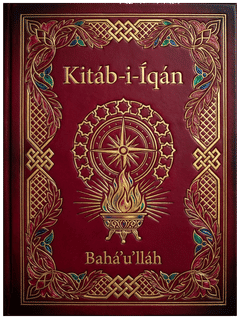
Kitáb-i-Íqán cover

Kitáb-i-Íqán

Bahá’u’lláh

The principal doctrinal work of the Faith, revealed in Baghdad within the space of two days and two nights in response to questions from the Báb’s maternal uncle. Shoghi Effendi described it as occupying a position unequalled by any work except the Kitáb-i-Aqdas — a model of Persian prose, at once original, chaste, vigorous, and remarkably lucid.

291 ¶

Prayers and Meditations cover

Prayers and Meditations

Bahá’u’lláh

Published in 1938, this companion volume to Gleanings contains 184 prayers and meditations selected by Shoghi Effendi from Bahá’u’lláh’s devotional writings revealed across successive exiles from Baghdad to ‘Akká. Shoghi Effendi described it as a volume whose perusal would deepen the spirit of devotion and faith.

858 ¶

Tablet of Aḥmad cover

Tablet of Aḥmad

Bahá’u’lláh

Revealed in Adrianople and addressed to a believer named Aḥmad, this Tablet has been invested by Bahá’u’lláh with a special potency and significance. Its central imagery draws on the metaphor of fire and water: “Be thou as a flame of fire to My enemies and a river of life eternal to My loved ones.”

17 ¶

Tablet of Carmel cover

Tablet of Carmel

Bahá’u’lláh

Revealed during a visit to Mount Carmel, this Tablet addresses the mountain directly and prophesies its future as the world spiritual and administrative center of the Faith. Shoghi Effendi designated it one of three foundational Charters. Its imagery of the Ark and the dwellers therein prefigures the Universal House of Justice.

5 ¶

Tablet of the Holy Mariner cover

Tablet of the Holy Mariner

Bahá’u’lláh

Chanted aloud in the outskirts of Baghdad just weeks before the Declaration in the Garden of Riḍván, its gloomy prognostications aroused the grave apprehensions of all who heard it. Only the Arabic portion has an authorized translation; the Persian portion remains untranslated.

57 ¶

The Hidden Words cover

The Hidden Words

Bahá’u’lláh

Seventy-one Arabic and eighty-two Persian aphorisms revealed around 1858 while walking along the banks of the Tigris in Baghdad. Originally designated the “Hidden Book of Fáṭimih,” Shoghi Effendi described it as a marvelous collection of gem-like utterances occupying a position of unsurpassed preeminence among the ethical writings of the Faith.

160 ¶

Will and Testament cover

Will and Testament

‘Abdu’l-Bahá

Written by ‘Abdu’l-Bahá in three parts between 1901 and 1908, opened and read after His passing on 28 November 1921. Shoghi Effendi designated it the Charter of the New World Order — the mightiest instrument forged to ensure the continuity of the three ages of the Bahá’í Dispensation.

59 ¶