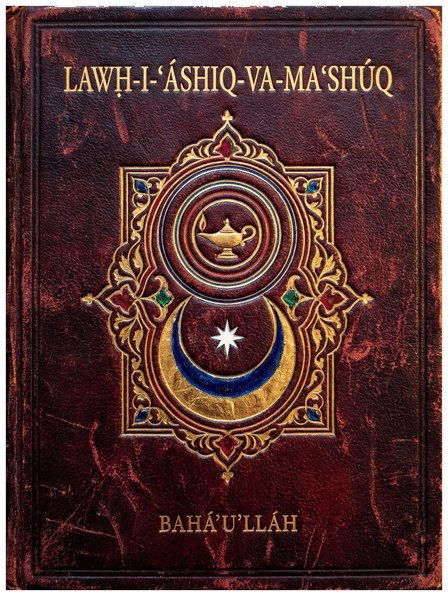
Lawḥ-i-’Áshiq-va-Ma’shúq
Tablet of the Lover and the Beloved
لوح العاشق والمعشوق
Bahá’u’lláh
An intricate commentary on the names and attributes of God, taking as point of departure a statement by the Báb which relates ‘His sacred mirror and eternal light’ to the name of God huwa (‘He’), which has an inner and outer aspect signifying both the unity of opposites and the alchemical fire and water attained of old by the prophet Moses.
The Lawh-i-‘Ashiq-va-Ma’shuq is one of the most mystically charged tablets of Baha’u’llah, composed during the Baghdad period (1853-1863). Taking its point of departure from a statement by the Bab relating “His sacred mirror and eternal light” to the divine name Huva (“He”), the tablet unfolds an intricate commentary on the names and attributes of God.
The work explores the paradox at the heart of all mystical traditions: the lover’s yearning for the Beloved who is simultaneously transcendent and immanent. Baha’u’llah transforms the classical Sufi metaphor of lover and beloved into a proclamation — that in this Day, the Beloved Himself has come seeking the lovers, reversing the eternal pattern of the seeker’s quest.
أيّها البلابل الإلهيّة! أنطلقوا من أرض الذّلّ المُشْوِكة مسرعين إلى الرّوضة المعنويّة، ويا أيّها الأحبّآء التّرابيّون! اقصدوا المأوى الرّوحانيّ. زفّوا إلى الرّوح البُشرى بأنّ المحبوب قد لبس تاج الظّهور، وفتح أبواب حديقة القِدم. بشّروا العيون بأنّ وقت المشاهدة قد حان، وأبشروا الآذان بأنّ أوان الاستما